Air drying hair doesn’t have to mean doing nothing
Leaving hair to dry on its own sounds passive, but how you handle it in those first few minutes after washing makes a real difference to the result.
Wet hair is heavier, weaker, and more vulnerable to damage than dry hair. The cuticle, the outer layer, is raised and more easily roughened. What you do (or don't do) in that window shapes how your hair looks and feels once it's dry.
Why water weight matters, especially for waves and curls
Wet hair is significantly heavier than dry hair. For anyone with wavy, curly, or coily hair, that extra weight can pull the curl pattern downward, stretching it out before it has a chance to form properly. This effect is more pronounced on finer hair, where there's less mass to counteract the pull of water.
Straight hair is less affected by this, but it still benefits from gentle handling when wet; rough treatment can cause breakage and leave hair looking dull once dry.
Removing as much water as possible early on, and supporting the hair while it dries, gives the natural texture the best chance to set.
Removing excess water: a few approaches
Gentle squeezing
Before reaching for any towel, use your hands to gently squeeze water from your hair, working from mid-lengths to ends. Don't wring or twist; wet hair is fragile regardless of type, and rough handling can cause it to snap or break. It also disrupts the cuticle and can distort natural curl or wave patterns. This simple step removes a meaningful amount of water before anything else touches your hair.
Wrapping in a hair towel
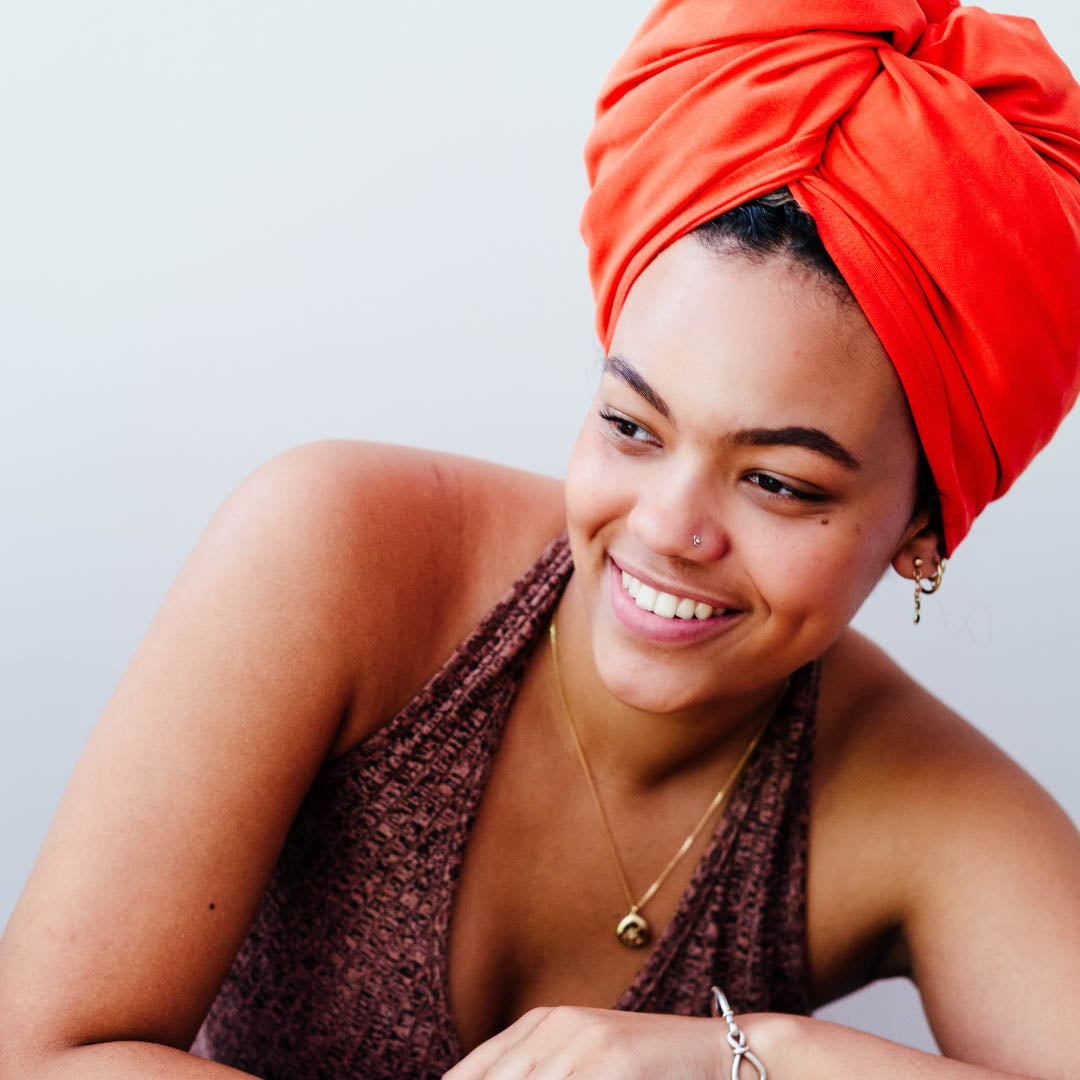
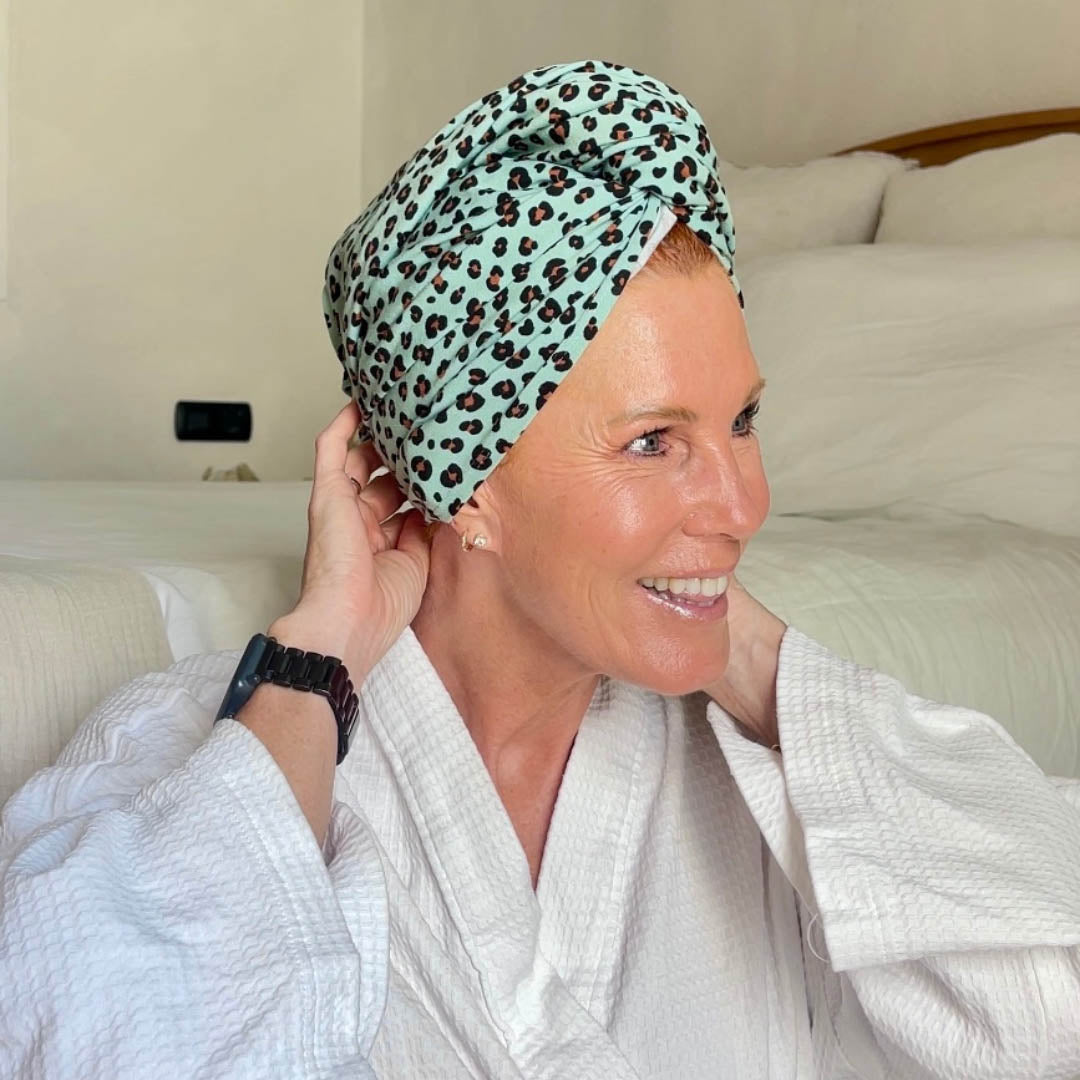
Wrapping hair in an absorbent towel after washing draws out water while keeping the hair contained and supported. The fabric you use matters here. A traditional terry towel, with its looped, abrasive surface, can roughen the cuticle and create friction, particularly on wavy or curly hair. A smooth-surfaced fabric absorbs water without roughening the cuticle.
Good Wash Day towels are made from organic jersey cotton, a soft knit that wraps without the need for twisting or fastening (you secure it loosely and leave it to work). Turban-shaped hair wraps encourage hair to be repeatedly twisted into the fabric before securing with a fastener, which can cause breakage; find out more in our blog post on the difference between hair towels and hair wraps.
Microplopping
Microplopping is a technique commonly used by people with wavy and curly hair. It involves gently cupping or scrunching sections of hair using a towel to encourage and support the natural curl or wave pattern while removing water.
Rather than rubbing or pressing hair flat, you bring the towel up to the hair, lifting and loosely scrunching rather than compressing. Done with a smooth-surfaced towel, this can help define texture from the start, rather than disturbing it.
Plopping
Plopping is a longer-form version of the same idea. After applying any leave-in products, you lay a hair towel flat, lower your head so the hair falls onto the centre of the towel, then wrap it loosely around your hair and secure it while you get ready. The hair sits coiled rather than hanging under its own weight, which allows curl or wave patterns to set without being pulled down. Read our full guide to plopping for more detail.
A light, flexible towel works best; something that wraps without adding unnecessary bulk or pressure. If you're not sure whether you need a hair towel or a hair wrap, it's worth understanding the difference before you buy.
Considerations by hair type
Straight hair is less prone to frizz than textured hair, but still benefits from a gentle approach. Rough towel drying can cause breakage and disrupt the surface of the hair, leaving it looking frizzy or flat. A smooth towel and a light squeeze rather than a rub is usually enough.
Fine hair tends to dry quickly but is most vulnerable to the weight of water pulling on waves or curls. Removing excess water early and using a lightweight towel helps.
Thick or very long hair benefits from a larger towel and more time wrapped. If hair is below bra-strap length, an XL towel gives better coverage without awkward folding.
Wavy and curly hair responds well to microplopping or plopping, which support the pattern from the moment you step out of the shower.
Coily hair often benefits from the longest wrapping time; the tighter the curl, the more patiently it dries.
Coloured or chemically treated hair is more porous than untreated hair, which means it absorbs water more readily and can lose moisture just as quickly. It tends to be more fragile when wet, so a gentle fabric and a light touch matter more, not less. The same applies to hair that has been bleached or highlighted.
Post-chemo, menopausal, or thinning hair is more fragile and benefits from a smooth fabric with no roughness or friction.
A few other things worth knowing
Air drying takes longer than heat drying, but it doesn't have to mean limp or undefined results. Preparation helps; rough handling in the first few minutes is harder to undo later.
Avoid touching or disturbing hair too much while it dries. Repeated contact breaks up the hair's natural pattern and increases frizz.
If you prefer to finish with a diffuser, a good towel routine first means less time under heat, which is better for hair in the long run.
Taking your towel on the road
A hair towel is one of those things that earns its place in a bag quickly. Pool and sea water can leave hair dry and brittle, and post-swim hair benefits from the same gentle handling as post-wash hair; rough hotel towels tend to be thick, heavy, and stripping. Having a lightweight towel that actually works means less time with the dryer and more time doing other things. It's why many of our customers rarely leave home without theirs.
Want to know more about choosing the right hair towel? Read our guide to hair towel fabrics.